DIY Gutter Safety Basics
Sponsored link, at no extra cost to you. As an Amazon Associate I earn from qualifying purchases. How we're funded
Most gutter-work injuries come from one thing: overreaching sideways instead of climbing down and moving the ladder. Not the climbing, not the height itself, not equipment failure. The habit of stretching for the last two feet of gutter because repositioning feels like a hassle.
Safety
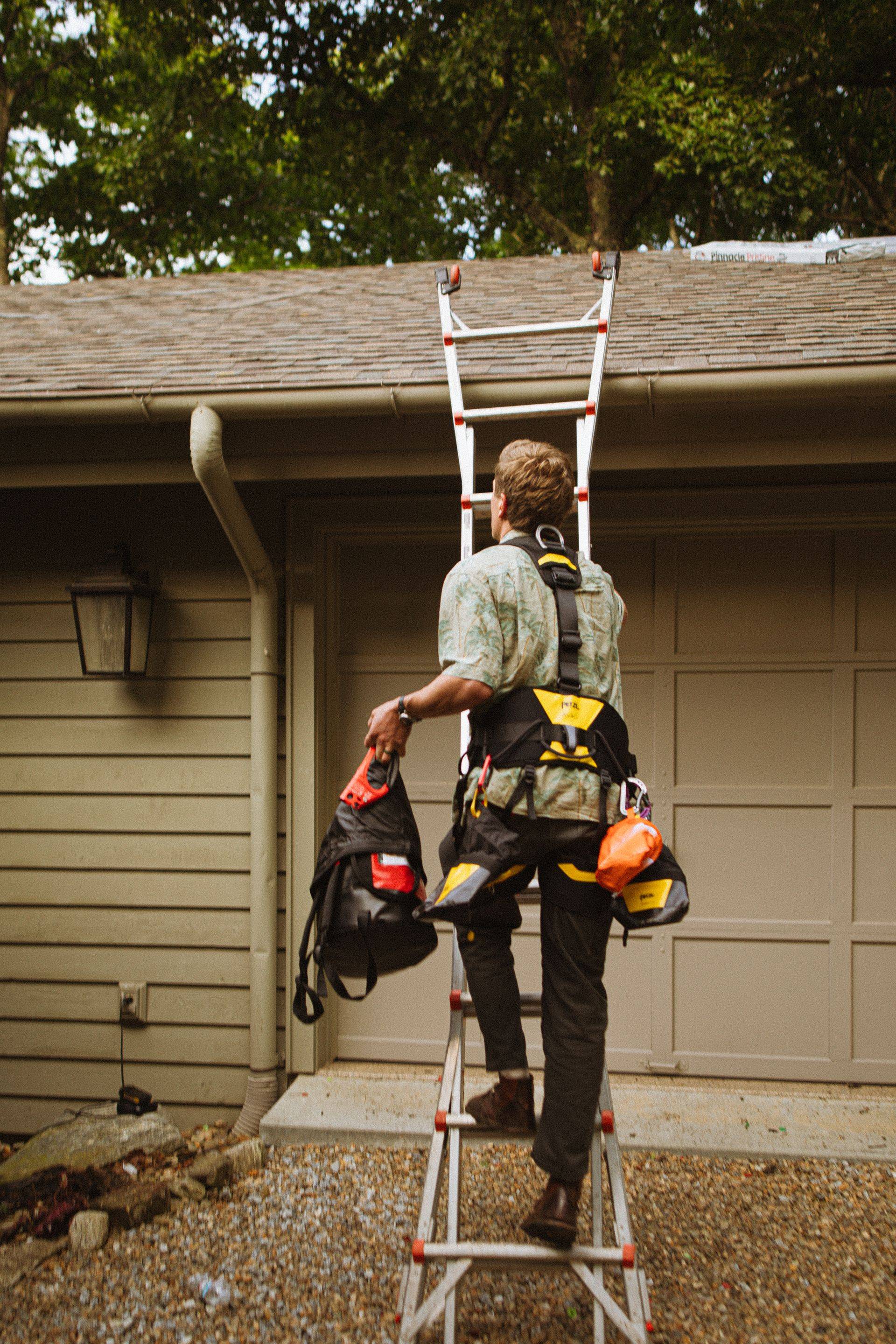
Never lean a ladder directly against a gutter. The gutter can bend or detach under load, and the ladder goes with it. Use a stand-off stabiliser that spans the roofline and bears on the roof edge instead.
Ladder placement
The 4-to-1 rule is the trade standard: one foot of base distance from the wall for every four feet of height to the support point. Too steep and the ladder can tip backwards; too shallow and the base can slide out.
Set up on firm, level ground. If you can’t get level footing, use a ladder levelling accessory rather than improvising with boards or bricks, which shift underfoot at exactly the wrong moment. On soft ground, a board laid flat under both feet spreads the load and stops the ladder sinking unevenly as you work.
Extension ladders should project about three feet above the roofline if you’re transitioning onto the roof, which gives something to hold while stepping across.
The move that actually causes falls
It’s rarely the climb. It’s leaning sideways from a fixed position to reach the last stretch of gutter rather than descending and moving the ladder a few feet.
That lean shifts your center of gravity outside the ladder’s base, and once it’s outside, the ladder kicks out sideways. The trap is that it happens when you’re three-quarters done with a section and repositioning feels disproportionate. Keep your belt buckle between the rails. That’s the whole rule, and it’s easy to self-check without thinking about it.
Equipment worth having
A ladder standoff or stabiliser is the one piece that changes the risk profile meaningfully. It holds the ladder off the gutter, widens the contact points so the ladder is harder to tip sideways, and gives clearance to work.
Beyond that: closed-toe shoes with real grip, since roof edges are often wet or dew-covered; a bucket hook or shoulder bag so both hands stay free while climbing; and gloves, because the sludge in a neglected gutter contains sharp shingle granules and occasionally the odd piece of glass or metal.
What to wear and carry
Keeping both hands free while climbing matters more than any single item. Carrying tools loose in one hand while your other holds the ladder is exactly the setup that turns a slip into a fall.
Don’t climb with anything in your mouth, don’t wear loose clothing that can catch on the gutter edge, and if the roof is wet or there’s any ice, wait. Damp roof edges are far more slippery than they appear from ground level.
Two-storey work changes the calculation
The consequences of a fall scale sharply, not linearly, with height. Plenty of people who happily handle single-storey gutter work draw a firm line at two storeys and hire it out. That isn’t overcaution; it’s an accurate read of how much worse the outcome gets.
Working alone raises the stakes at any height. If nobody knows you’re on a ladder, a fall that would otherwise be survivable becomes considerably more dangerous. Tell someone, or work when someone’s home.
Want a pro to handle it?
The fastest way to learn what this job costs where you live is to have a few local contractors price it.
- Describe the job once and compare several local pros
- Quotes are free, and you're not committed to hiring anyone
- Worth doing even if you fix it yourself — it tells you what the work is worth
Sponsored link — we may earn a commission if you request a quote, at no cost to you. How we're funded
Compare gutter cleaning options on AngiYou continue on Angi to describe the project.
After the job, not just during it
Don’t lean tools, a hose, or the ladder itself against the gutter when you’re finished. It’s an easy way to undo careful work with an avoidable dent or a pulled hanger, and it’s a common cause of the sagging people call about later.
Clear the ground below before you start, too. Landing on a garden tool or a coiled hose turns a short fall into an injury.
When to just call a professional
Steep roof pitches, second-storey work on anything less than firm level ground, three-storey work of any kind, ice anywhere on the roof, working alone, or genuine uncertainty about your own balance are all sound reasons to hire the job out.
None of those is a failure of DIY ambition. They’re the same judgement calls experienced tradespeople make about their own work, which is why professional crews use harnesses and stabilisers rather than relying on being careful.
Frequently asked questions
What's the single most important gutter safety habit?
Repositioning the ladder instead of overreaching sideways. That one habit prevents more falls than any piece of equipment, because overreaching shifts your center of gravity outside the ladder's base and that's what causes the ladder to kick out.
Is DIY gutter cleaning actually dangerous?
Ladder falls are a leading cause of home-maintenance injury, and gutter work is one of the most common reasons homeowners are on a ladder. Basic precautions reduce the risk substantially, but the risk is real rather than theoretical.
How should a ladder be positioned for gutter work?
Use the 4-to-1 rule: one foot of base distance from the wall for every four feet of height to the support point. Set it on firm level ground, and never rest the top against the gutter itself, which can bend or detach under load.
At what point should I hire gutter work out?
Two storeys is where most people reasonably draw the line, because fall consequences scale sharply rather than linearly with height. Steep roofs, soft or sloping ground, working alone, and any genuine uncertainty about your own balance are all sound reasons regardless of height.