Gutter Overflow: Causes & Fixes
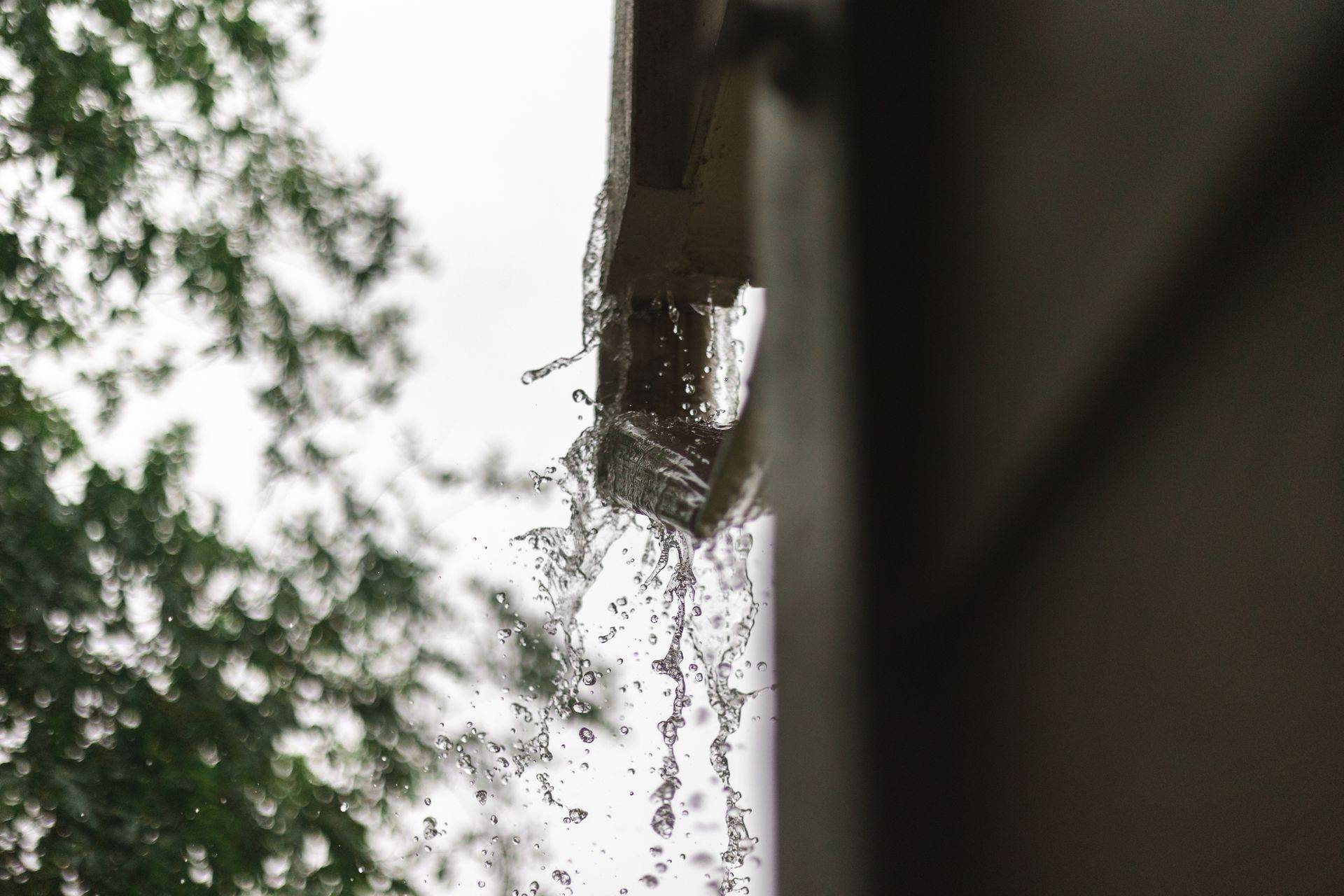
Gutter overflow has five causes, and cleaning only fixes one of them. Debris is the most common and the easiest to rule out, which is why “just clean it” is reasonable first advice and unreliable second advice. If a gutter still overflows after a genuine cleaning, the cause is capacity, pitch, a hidden downspout blockage, or water getting behind the gutter entirely.
Diagnosing which cause you have
Where and when the overflow happens narrows it down quickly.
| What you see | Most likely cause | Typical fix cost |
|---|---|---|
| Overflow in ordinary rain, debris visible | Clog in trough or outlet | $100 – $250 |
| Only in heavy rain, gutter is clear | Undersized gutter or downspout | $400+ per run |
| One spot only, water stands after rain | Low spot from a failed hanger | $150 – $350 |
| Clean gutter, water backs up at outlet | Blockage inside the downspout | $100 – $200 |
| Water runs behind the gutter | Missing or failed drip edge | $200 – $600 |
| Ranges span published cost guides, not a quote. See our cost methodology. | ||
The five-minute hose test
This resolves most cases without a diagnosis from anyone. Run a hose into the gutter at the end furthest from the downspout and watch.
- Water pools somewhere along the run rather than traveling: pitch problem or a low spot from a sagging hanger.
- Water reaches the outlet but backs up there: blockage in the downspout, not the trough.
- Water flows through fine but the gutter still overflows in real storms: capacity. A hose delivers far less water than a downpour on a full roof.
- Water appears behind the gutter or down the fascia: drip edge, not gutter.
Debris clogs: the common case
Leaves, grit, and packed sludge block flow at the trough or, more often, right at the downspout opening where the trough narrows. This is behind most overflow complaints and is both the cheapest to fix and the easiest to rule out.
The important detail is that clearing the trough is not the same as clearing the outlet. A gutter can look immaculate along its length while the opening into the downspout is plugged solid. Our clogged gutters guide covers the signs visible from the ground.
Undersized capacity: the cause that hides
A gutter or downspout sized for typical rainfall overflows in a genuine storm with no debris anywhere in the system. Because it only fails under stress, it can go unnoticed for years and gets blamed on leaves each time.
This is common after a re-roof or an addition that increased roof area without resizing the gutters, and it’s common wherever 2x3 downspouts serve a large roof. Downspout capacity is the more frequent constraint: five-inch gutters feeding adequate downspouts usually outperform six-inch gutters feeding undersized ones. Our downspouts guide covers sizing.
Note
If overflow only ever happens in genuinely heavy rain and the system is clear, stop looking for a blockage. That’s a capacity problem, and no amount of cleaning changes it.
Incorrect pitch and low spots
Too little fall lets water stand in the trough instead of draining, and standing water needs very little additional rain to spill over the edge. This is common on older homes where hangers have loosened unevenly, changing the pitch without anyone touching the gutter.
Standing water after rain stops is the diagnostic. A correctly pitched gutter drains empty. Our sagging gutters guide covers re-pitching.
A blockage you can’t see
A clog inside the downspout — often at an elbow or where it enters underground drainage — backs water up into the trough exactly like a surface clog, but no amount of clearing the trough fixes it.
Tap the downspout from top to bottom. A hollow ring means clear; a dull thud locates the blockage. Buried drainage is the frequent culprit and the easiest to overlook, because the blockage may be many feet from the house.
Want a pro to handle it?
The fastest way to learn what this job costs where you live is to have a few local contractors price it.
- Describe the job once and compare several local pros
- Quotes are free, and you're not committed to hiring anyone
- Worth doing even if you fix it yourself — it tells you what the work is worth
Sponsored link — we may earn a commission if you request a quote, at no cost to you. How we're funded
Find gutter repair help on AngiYou continue on Angi to describe the project.
Water behind the gutter is a different problem
If water runs down the fascia behind the gutter rather than over its front edge, the gutter isn’t the fault. That’s usually a missing or failed drip edge — the metal flashing that should direct water off the roof deck and into the trough rather than letting it track back under the shingle edge.
This matters more than ordinary overflow because the water is in direct, sustained contact with the fascia board, which is what hangers screw into. It rots wood faster than any other failure mode here and is frequently mistaken for a gutter problem for years.
Working through it in order
Start cheap and specific:
- Clear the trough and the downspout openings. Rules out the most likely cause for the least money.
- Run the hose test. Distinguishes pitch, downspout blockage, and capacity in five minutes.
- Check for standing water after rain stops. Confirms pitch.
- Check behind the gutter during rain. Confirms drip edge.
- Only then consider resizing. It’s the most expensive answer and the least often the right one.
Jumping to “the gutters need replacing” skips four cheaper fixes that solve most overflow complaints on their own.
Frequently asked questions
Why does my gutter overflow even after cleaning?
Undersized downspouts, incorrect pitch, or a clog further down the downspout than you can see are the usual causes when overflow continues after a proper cleaning. Run a hose into the gutter and watch where water backs up, which tells you which of the three you have.
Does overflow always mean a clog?
No. Debris is the most common cause, but a completely clear gutter overflows if it's undersized for the roof area, pitched wrongly, or feeding downspouts too small to discharge what the gutter collects.
Why does my gutter overflow at one specific spot?
Overflow concentrated in one place usually means a low spot from a sagging hanger, or a blockage just downstream of that point. Overflow spread along a whole run points to capacity or pitch instead.
Is water going behind the gutter the same problem?
No, and it's a different fix. Water running behind the gutter usually means a missing or failed drip edge on the roof rather than anything wrong with the gutter itself, and it rots fascia quickly because the water is in direct contact with wood.