Gutter Cleaning: What It Takes
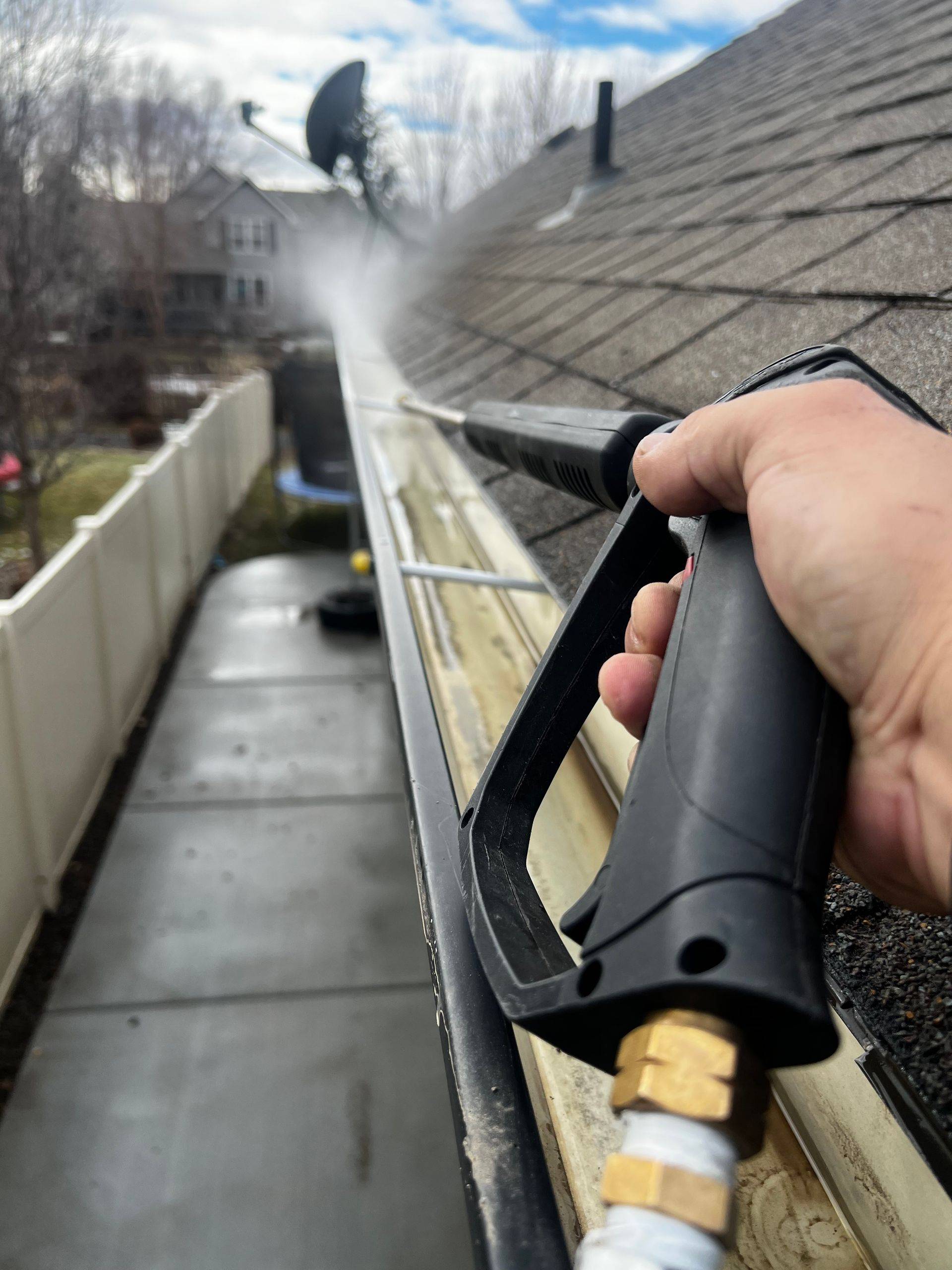
Gutter cleaning means clearing leaves, seed pods, roof grit, and standing sludge from the trough and downspout openings so water reaches the ground instead of the siding, fascia, or foundation.
What’s actually in a clogged gutter
It’s rarely just leaves. A gutter that hasn’t been touched in a year usually holds a mix of decomposed leaf matter, asphalt granules washed off the shingles, wind-blown dirt, and, if it’s been sitting wet long enough, a black, faintly sulfurous sludge that smells nothing like the tidy word “debris” suggests. That smell is anaerobic decomposition, the same process that happens in a compost pile with no air getting to it. It’s harmless to touch with gloves on, but it’s worth knowing what you’re actually signing up for before you climb the ladder.
Ground-level signs it’s time
Water sheeting over the front edge during an ordinary rain, not a once-a-decade storm, just regular rain, is the clearest sign. Streaking or staining on the siding below the gutter line is the second-most obvious, since it usually shows up before you’ve consciously noticed the overflow itself. A section that’s started to sag is a third: wet, packed debris is heavier than most people expect, and it’s often the extra weight that finally pulls a marginal hanger loose.
How often it actually needs doing
Twice a year, late spring and after autumn leaf-drop, covers most homes with moderate tree cover in a climate without major freeze risk. That default breaks down fast under either heavy year-round tree cover (pines and firs shed on their own schedule, not one clean autumn drop) or high freeze risk, where a dedicated pre-winter hanger check matters as much as the cleaning itself. Your city page has climate-specific guidance if you want something more tailored than a national rule of thumb.
The ground-level move that actually causes injuries
Safety
It’s rarely the climbing itself that causes a fall. It’s overreaching sideways from the ladder to avoid climbing back down and repositioning it. That sideways lean shifts your center of balance outside the ladder’s footprint. See our ladder safety guide before doing any of this yourself.
Single-story homes with stable, flat ground underneath are the reasonable DIY case. Two-story homes, steep roofs, or any hesitation about your own balance are all good reasons to hire it out. That’s not a cop-out; it’s the same calculation a lot of experienced DIYers make for themselves.
What a professional cleaning should include
A real cleaning clears both the trough and the downspout openings, then confirms water is actually flowing through by running a hose or checking during light rain. A crew that skips the flow check and just scoops visible debris is doing half the job. Ask about it directly if a quote doesn’t mention it.
Want a pro to handle it?
The fastest way to learn what this job costs where you live is to have a few local contractors price it.
- Describe the job once and compare several local pros
- Quotes are free, and you're not committed to hiring anyone
- Worth doing even if you fix it yourself — it tells you what the work is worth
Sponsored link — we may earn a commission if you request a quote, at no cost to you. How we're funded
Compare gutter cleaning options on AngiYou continue on Angi to describe the project.
When cleaning alone won’t fix the problem
If overflow continues after a proper cleaning, the cause has shifted from debris to something structural: undersized downspouts, incorrect pitch, or a blockage further down the downspout than you can see. Our gutter overflow guide walks through diagnosing which one it is.
Frequently asked questions
How much does gutter cleaning cost?
A single-story home typically runs less than a two-story one, mostly because of access and safety equipment rather than gutter length. See our gutter cost guide for current ranges.
Can I clean gutters myself?
For single-story homes with stable ground access, yes. Two-story homes carry enough fall risk that many homeowners choose to hire it out, and that's a reasonable line to draw.
Will gutter cleaning fix an overflow problem?
Sometimes. If the overflow was caused by debris, cleaning solves it outright. If it's caused by undersized downspouts or bad pitch, cleaning won't fix the underlying issue. See our gutter overflow guide.