Ladder Safety for Gutter Work
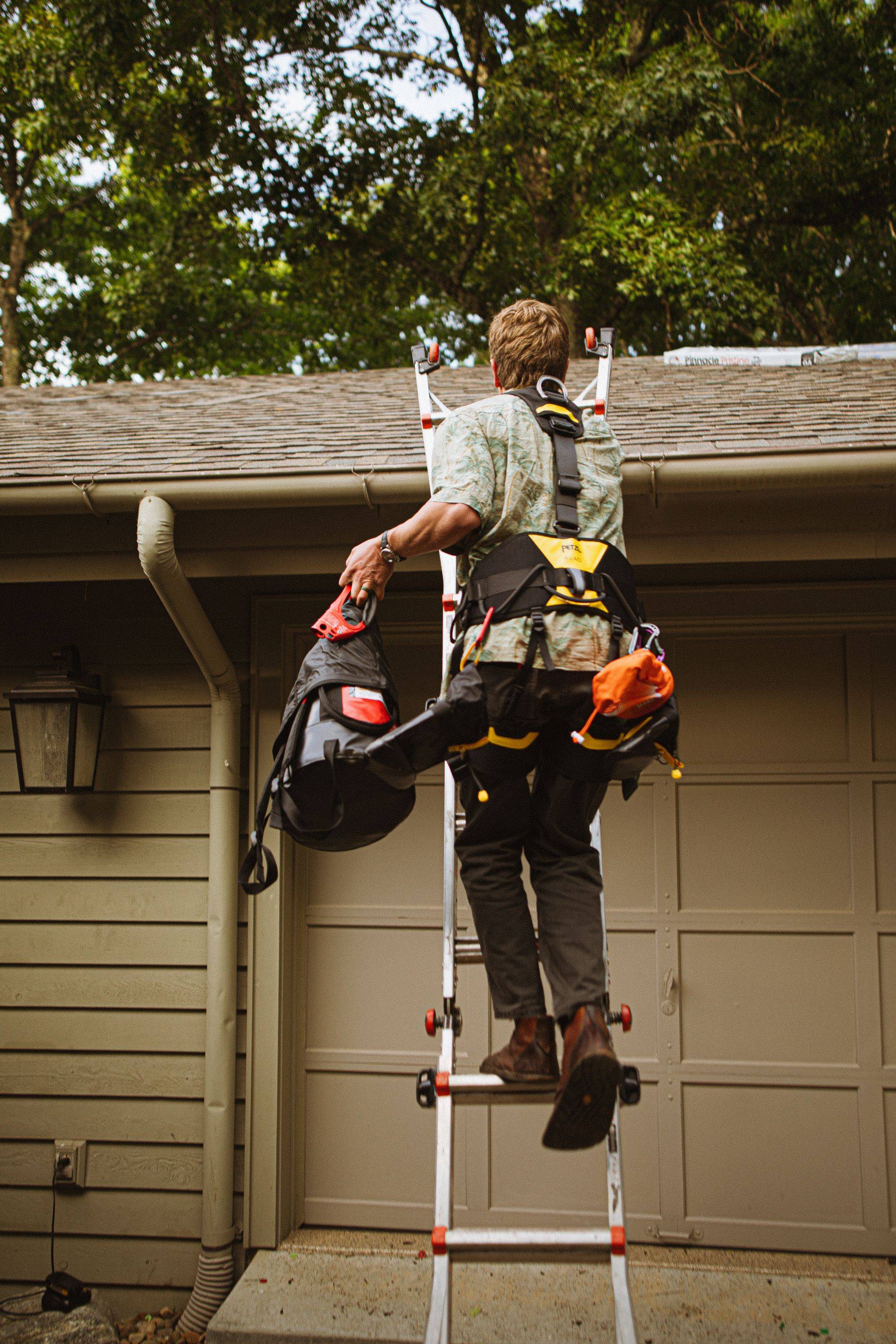
Most ladder injuries during gutter work trace back to a handful of specific, preventable habits rather than bad luck. Knowing what actually causes falls is more useful than generic “be careful” advice.
The 4-to-1 placement rule
For every four feet of height to the ladder’s support point, the base should sit one foot out from the wall. This is the standard trade rule for stable footing, and it’s worth actually measuring rather than eyeballing it, since the margin for error narrows the higher you go.
Never lean the ladder on the gutter itself
Gutters can bend or pull loose entirely under a ladder’s weight, since they’re not structurally designed to bear that kind of point load. Use a stand-off stabilizer that spans the roofline and rests against the roof edge instead. It’s a small piece of equipment that prevents a specific, common way ladder work damages the exact thing you’re trying to maintain.
The move that actually causes falls
It’s rarely the climbing itself that leads to an accident. It’s overreaching sideways from a fixed ladder position to avoid the hassle of climbing back down and repositioning it a few feet over. That sideways lean shifts your center of balance outside the ladder’s base of support, and it’s an easy trap to fall into simply because moving the ladder feels like unnecessary extra effort when you’re most of the way through a section.
Two-story work changes the calculation entirely
The consequences of a fall scale sharply, not gradually, with height. A fall from a single-story eave and a fall from a two-story eave are not the same order of risk. Many experienced DIYers who happily handle single-story gutter work themselves still hire out anything above one story, and that’s not overcaution; it’s an accurate read of how much worse a fall from that height actually is.
Basic gear that genuinely helps
Closed-toe shoes with real grip matter more than people expect, particularly on a wet or dew-covered roof edge early in the day. Keeping both hands as free as possible while climbing is the other significant factor — a bucket hook or a shoulder bag beats carrying tools loose in one hand, since a compromised grip on the ladder while your other hand is occupied is exactly the setup that leads to a slip.
A habit worth building before you start
Before climbing at all, walk the full length of the area you’ll be working and mentally plan where you’ll need to reposition the ladder, rather than discovering mid-job that a section is out of comfortable reach. Planning the moves ahead of time makes it easier to actually follow through on repositioning instead of talking yourself into one more risky overreach.
Frequently asked questions
What's the most dangerous part of DIY gutter work?
Overreaching sideways from the ladder rather than climbing down and moving it — that sideways lean is where most falls during gutter work actually happen, not the climbing itself.
Is an extension ladder or a step ladder better for gutter work?
An extension ladder resting against the roofline (ideally with a stand-off stabilizer) is the standard choice for gutter height work — step ladders generally don't reach safely or provide stable footing at typical eave heights.