Seamless vs Sectional Gutters
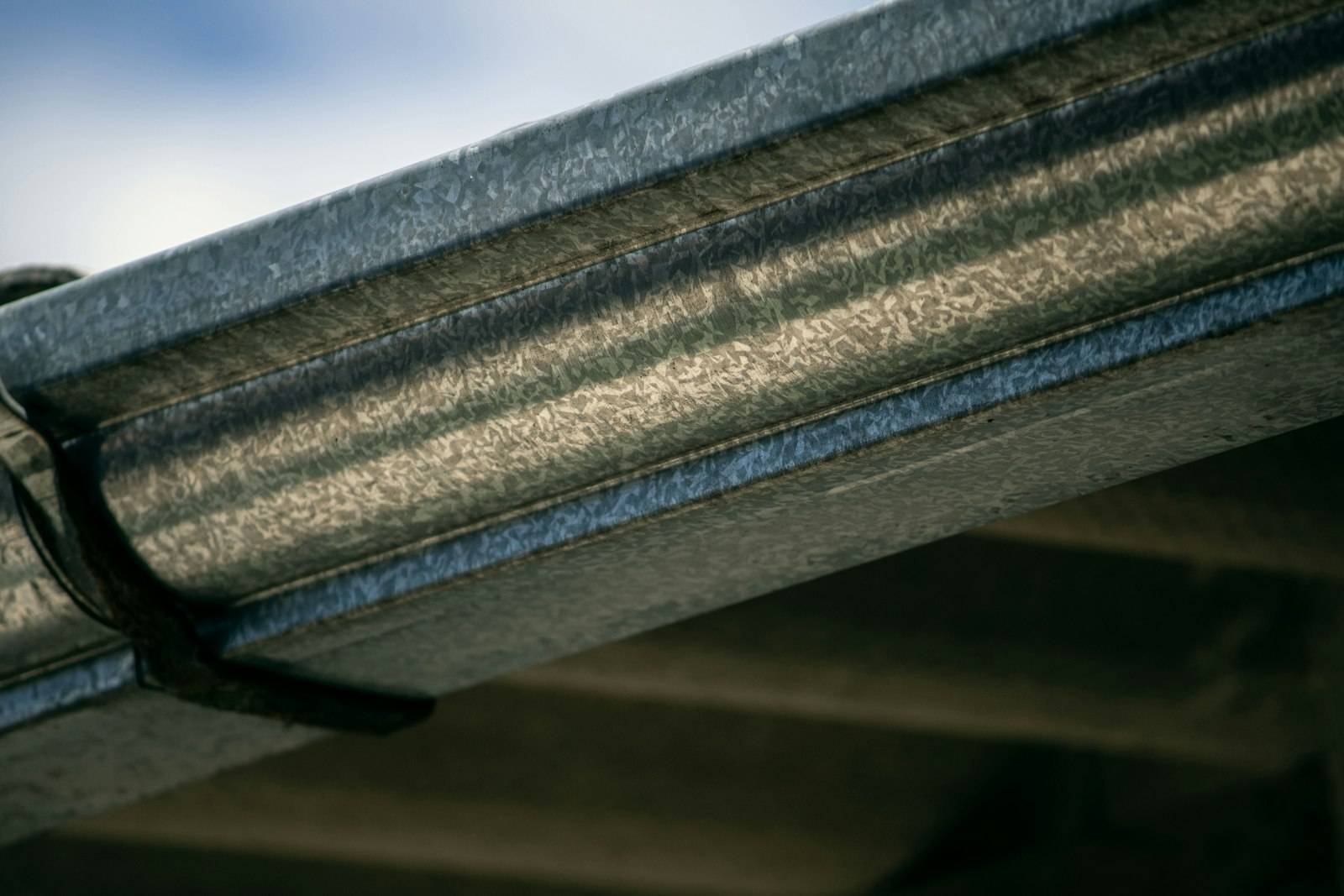
Seamless and sectional gutters do the same job with a fundamentally different manufacturing approach, and the right choice depends on how much you value fewer long-term leak points against a lower upfront cost.
What “seamless” actually means
Seamless gutters are formed on-site from a continuous coil of aluminum, fed through a portable forming machine that shapes it to the exact length of each run. A single stretch of gutter has no seams except at corners and end caps. “Seamless” describes the long runs specifically, not a total absence of any joint anywhere in the system.
Fewer seams, fewer leak points
Since seams are the most common point of failure on a gutter system, reducing their number is the entire practical argument for seamless over sectional. A sectional run might have a joint every ten feet; a seamless run covering the same distance might have none at all along that stretch, which meaningfully lowers the odds of a leak developing anywhere along it over the system’s lifespan.
Sectional gutters are the realistic DIY option
Sectional gutters come in fixed lengths joined with sealant at each connection, and installing them doesn’t require the specialized forming equipment a seamless install needs. A confident homeowner with the right tools and enough patience can handle a sectional install themselves. That accessibility is the main practical advantage sectional has over seamless, on top of lower material cost.
Cost comparison, and what’s actually driving it
Sectional materials cost less upfront and can be self-installed, avoiding labor cost entirely if you do it yourself. Seamless requires a professional crew with a forming machine, which adds labor cost that sectional doesn’t necessarily carry — but that added cost buys a genuine reduction in future leak risk, not just a nicer-looking installation.
Which to choose for a full replacement
For a full replacement on a home you plan to stay in long-term, seamless is usually the better value despite the higher upfront cost, since it reduces the ongoing maintenance burden a sectional system carries over years of seams working loose or developing leaks. For a budget-conscious partial repair or a home you don’t expect to own for many more years, sectional remains a perfectly reasonable choice.
A middle-ground consideration
It’s worth knowing that seamless and sectional aren’t mutually exclusive across an entire house — some homeowners install seamless on the most visible or leak-prone sections of their roofline and stick with sectional elsewhere, balancing cost against where a leak would actually cause the most damage.
Frequently asked questions
Can I install seamless gutters myself?
Not typically — seamless gutters are formed on-site with specialized equipment, so installation is a professional job. Sectional gutters are the realistic DIY option.
Do seamless gutters ever have any seams at all?
Yes, at corners and end caps — 'seamless' refers to the long runs between those points being one continuous piece, not a total absence of any joint anywhere in the system.